How AI Turns Your Sales Conversations Into Powerful Digital Marketing Content
Turn every sales conversation into high-value marketing content. Learn how AI analyzes calls, finds insights, and creates blogs, emails, and social posts automatically.
 Reviewed by: Margaret Atwood
Your marketing team writes. Your sales team talks. Both are usually separate. But they should not be.
Because in between those client conversations lies a treasure of insights that typically goes unused.
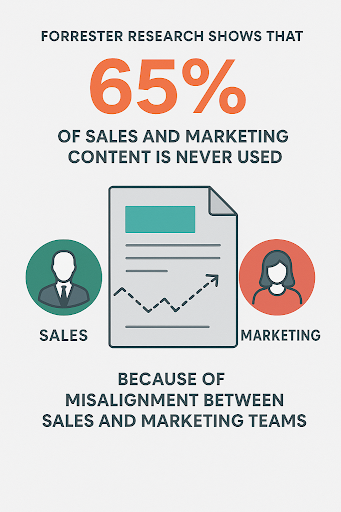
In fact, Forrester research shows that 65% of sales and growth marketing content is never used because of misalignment between sales and marketing teams.
In this article, we’ll discuss how you can use AI tools to capture what your customers say to you. Then turn it into content that connects, engages, and converts.
How AI turns your sales conversations into powerful digital marketing content
Since AI has hit the market, marketers have changed the way they used to look at their sales calls and customer conversations. Advanced analytics and automation now help teams identify intent, pain points, and buying signals more accurately, allowing them to tailor messaging across channels.
This shift has also increased the adoption of product explainer video which translate complex insights from customer data into clear, engaging narratives that improve understanding, shorten sales cycles, and drive conversions.
They are now looked at as a goldmine for digital marketing.
Modern AI tools can analyze and even convert conversations into content formats like blogs submission, emails, or case studies or even business explainer videos.
This turns your day-to-day sales talk into data-backed stories that attract and convert more leads.
1. Sales conversations are full of gold
Every sales call or chat, including conversations through a WhatsApp chat widget has insights that most brands rarely use.
In those interactions, customers reveal their pain points, preferences, and even the language they use to describe their needs.
That’s pure marketing gold. If you know how to use it.
AI tools like Gong, Fireflies, and Chorus analyze these conversations. They identify recurring themes and emotional triggers. This helps marketers create content that directly mimics real customer language and intent.
This means, instead of experimenting on different things your audience might care about, you’re literally hearing it from them. And creating your plan accordingly.
2. Extracting customer pain points and buying triggers
AI tools don’t just transcribe your sales conversations; they interpret them. Tools like Gong, QR Code Generator, and Fireflies use natural language processing (NLP) to identify recurring customer pain points and objections in hundreds of calls.
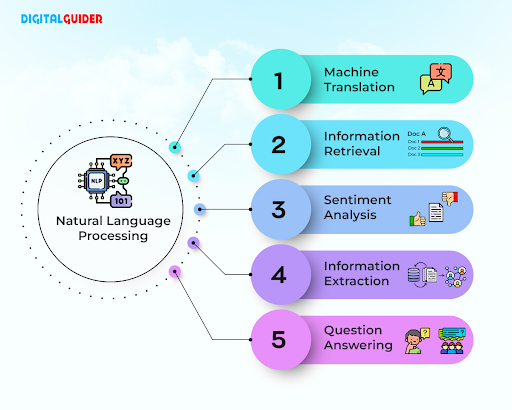
Source: Digital Guider
For example, if multiple customers mention “slow onboarding” or “hidden costs,” AI will flag those as common concerns.
Marketers can then address these issues through blog posts, FAQs, or ad copies.
This data-driven approach helps you align content with customer psychology.
3. AI transcription and summarization
These tools are a time saver for sales agents and even marketers. AI transcription tools like Otter.ai and Chorus turn sales calls into structured, searchable text. For those working with video content, Adilo offers Video Transcription as part of its service, making it easy to transcribe spoken words into text and embed them directly into your video content, improving accessibility and SEO. So you do not have to note them down.
Beyond transcription, summarization tools, like paragraph-generator.com, then condense those long discussions into key takeaways and objections.
This method saves hours and also make sure no valuable detail is lost.
Just like how developers configure CI/CD pipelines to automate deployment, teams can automate content workflows using these AI summaries. That’s how raw dialogue is converted into ready-to-use content.
4. Turning call insights into blogs, FAQs, and ad copy
Once AI extracts the insights from sales calls, it doesn’t stop there. It helps turn them into actual marketing assets. For even more engagement, consider turning your AI-generated blog posts or FAQs into video content. Adilo’s Video Hosting and Video Player allow you to seamlessly upload and stream these videos to your audience, providing a more dynamic experience that encourages higher viewer retention and deeper engagement with your content.
Give your summarized conversations to tools like Jasper and ChatGPT. They’ll transform them into blog posts, FAQs, email campaigns, or even ad copy using AI capabilities that speed up creation. These insights can also be repurposed using an AI video generator to create short explainer videos or personalized video ads directly from real sales conversations.
For example, multiple customers ask the same question on calls. So you can create an FAQ page or a “how-to” blog post on that.
This way, your real customer conversations directly shape your marketing. Your content becomes not only authentic but laser-focused on what your audience actually cares about.
5. Creating personalized marketing content at scale
AI enables you to personalize on a level that manual marketing can’t match.
By analyzing sales call data, tools like HubSpot AI and Salesforce Einstein can segment your audience into sub-groups and create tailored emails, landing pages, and ad copy for each of them. Email marketing tools for small business can also automate personalized campaigns based on audience segmentation.
For example, enterprise clients often mention scalability during calls. AI can automatically highlight that feature in follow-up content or advertisements. Brands can even use an AI ad maker to instantly generate hyper-personalized ad creatives based on insights extracted from sales calls.
This allows brands to deliver personalized messages to thousands of people at once.
6. Training chatbots and sales assistants with real conversations
When AI analyzes conversations, it learns from them.
Businesses feed real sales call transcripts into conversational AI platforms like Drift or Intercom. They can also incorporate insights from employee engagement survey tools such as communication patterns or team feedback to refine the chatbot’s tone and clarity.
This means when prospects chat with your AI assistant, AI recruitment software helps the system deliver more relevant, human-sounding answers instead of generic scripts.
With proper training, these smart bots understand preferences and intent better. They can then convert casual visitors into leads.
Meaning, your sales team’s real-world experience becomes your chatbot’s training data.
7. Improving content tone and messaging
AI can also analyze your previous content, social media messaging, and ads to find patterns in how your team communicates. Platforms like Marketing Lad use this approach to study what already works for your brand.
It can tell you what tone works, which phrases resonate, and where customers hesitate. Tools like Jasper Brand Voice can then use that data to fine-tune your brand messaging.
For example, customers respond better to conversational language. AI will help you adapt that tone across your blogs, emails, and ad copy.
This creates consistency in what your marketing team writes. So your overall message sounds more relevant, natural, and persuasive.
8. Scaling marketing impact with interactive AI video
Once AI has extracted insights from your sales calls, the most effective way to deploy them is through AI Video and Interactive Video campaigns. Instead of static content, you can use AI video generators to turn a successful sales pitch into a professional video featuring a digital avatar—no filming required.
To maximize the ROI of these videos, brands are now adding Interactive Elements directly into the player:
- Integrated CTAs: Place "Book a Demo" or "Buy Now" buttons at the exact moment a customer’s pain point is addressed in the video.
- In-Video Quizzes & Polls: Use these to qualify leads or check for understanding during a product walkthrough, turning a passive viewer into an active participant.
- Clickable Hotspots: Allow viewers to click on specific products or features within the video to see more details instantly.
The real power, however, lies in the Video Analytics. Unlike traditional video, interactive video allows you to measure exactly where viewers clicked, how they answered quizzes, and which hotspots garnered the most interest. This data creates a feedback loop: you can take the top-performing phrases from your analytics and run them through Sentence Rewriter to further polish your messaging for future campaigns, ensuring your marketing is always backed by real-time user behavior.
Conclusion
Because of AI, sales and marketing are no longer separate teams but connected systems.
Every customer conversation now fuels smarter, more relevant digital marketing. From identifying pain points to training chatbots, AI makes sure that no insight is wasted.
Hence, the resulting marketing content doesn’t just sound good but actually reflects what customers care about.
So, the most powerful marketing ideas aren’t invented now. They’re discovered in the conversations you’re already having.