AEO vs. SEO: Key Differences and Importance in Digital Marketing
AEO vs. SEO explained for 2025. Learn key differences, zero-click searches, AI Overviews, and how to optimize content for both search engines and AI answer engines.
 Reviewed by: Margaret Atwood
Search has changed, and many of us didn’t even realize it.
As of 2025, over 58.5% of Google searches end without a click. That’s because users get their answers right in search results through AI-powered summaries and instant snippets.
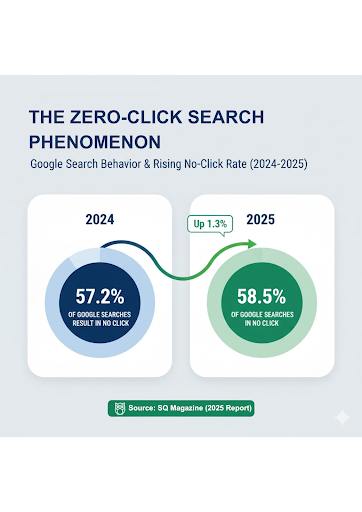
Create a Pie Chart showing the percentage of Google searches that end without a click (58.5%) versus searches that result in a website visit (41.5%). This visual representation helps readers quickly understand how zero-click searches have become the dominant search outcome and why businesses need to optimize for both SEO and AEO.
That means ranking on page one isn’t enough anymore. Even top-ranked sites now lose traffic because the user never visits them.
That’s why a new concept is rising: Answer Engine Optimization (AEO). It means optimizing your content for AI-driven search. Not just traditional search engine results (SEO).
In this article, I’ll break down “AEO vs. SEO.” So you know why both matter, how they differ, and how you can prepare for this evolving search landscape.
What is AEO?
In Answer Engine Optimization (AEO), we optimize our content for AI systems. So they can understand it and extract direct answers from it.
Our goal is to get our content feature in AI Overviews, zero-click answers, and chat-based search tools like ChatGPT, Perplexity, and Gemini.
Because search engines don’t just crawl your page anymore, they interpret it. They break down entities, key facts, and structured data to generate instant answers.
So if your content isn’t formatted clearly, these systems skip it.
With AEO, we make our content the source of info that AI relies on.
What is SEO?
As we know, Search Engine Optimization (SEO) is to improve our content so it ranks higher on SERPs.
We want our pages to appear as the first search result. So people click on it, and we get web traffic.
For that, we work on many things. Such as:
- Find out keywords for the content
- Optimize the structure of our pages (On-page SEO)
- Secure backlinks from high-ranking sites (Off-page SEO)
- Checking page speed and responsiveness (Technical SEO)
- Getting content depth and relevance
SEO makes your site perform well in classic search results, while AEO prepares your content for AI-driven answers.
So both work together. SEO brings visibility, and AEO allows modern search systems to extract and understand your content.
Key differences between AEO and SEO
Both AEO and SEO work for the same outcome, which is visibility and traffic. But both operate very differently.
To understand how both shape your digital strategy, I’m breaking down the major differences.
1. Ranking keywords vs. answering questions
In traditional SEO, we used to pick a keyword and build content around it. If it's good, we were ranked high on the search results page.
That meant writers and marketers optimized for phrases users searched for whether it was product terms, service queries, or even competitive phrases like marketing sites for guest posting.
But now, with AI-powered systems becoming dominant, the game has changed.
People are asking full questions now not just keywords.
Recent analyses show that many of the most searched queries are full-sentence questions (like “what is my IP?” or “how to tie a tie?”).
And AI Overviews appear on around 20–21% of queries today. Mostly because of longer, question-style queries.
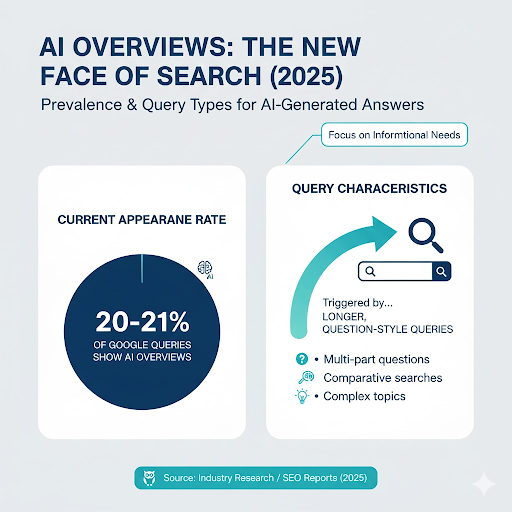
This shift means instead of fighting to rank for a keyword, you need to write content that answers real questions.
2. Traffic pages vs. answer-ready content
AI-powered search has changed what “visibility” means for us. Today, a page might rank well, but still get almost no organic traffic.
Because the user gets their answer on the search engine results page itself.
In 2024, about 58.5% of Google searches in the U.S. ended without a click (Search Engine Land).
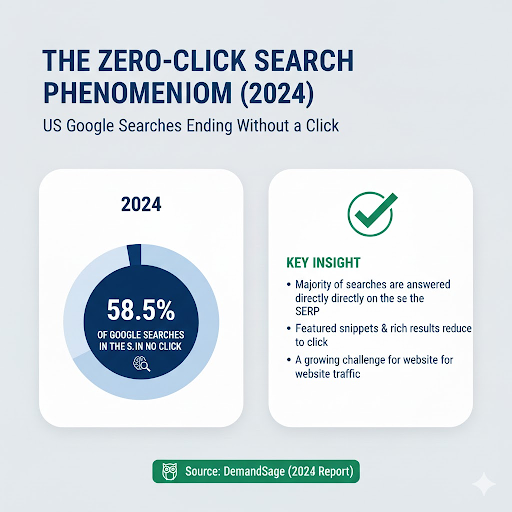
This means users got their answers in AI overviews. So many users never reach the original content.
That means traditional SEO-optimized blog posts (designed to drive clicks) are losing power.
Answer-ready content that is concise and fact-based by AI is becoming more valuable.
3. SERPs vs. zero-click answers
More and more searches now end on the results page itself. Without visitors clicking on any page.
That’s what we call “zero-click” searches.
SERPs (traditional search engine results pages) used to be where websites competed for clicks.
With AI-driven summaries and instant responses, AI turns sales into marketing by educating users before they even visit your website.
This means for digital marketing:
- Ranking high on SERPs doesn’t guarantee traffic anymore.
- Your content must be “answer-ready” and structured so AI and search engines can easily pull what they need.
Pages that serve quick answers now stand a better chance of visibility.
4. Long-form content vs. concise, structured responses
SEO used to reward long-form content. Like detailed articles, in-depth guides, and 2,000-word explainers built to cover a topic thoroughly.
That’s why writing content for digital marketing often focuses on length, depth, and keyword coverage. It was easier for search engines to understand your expertise and topical authority through comprehensive content.
But AEO works differently.
It doesn’t want long walls of text. It wants clean and scannable responses to extract instantly. That means:
- Short paragraphs
- Clear definitions
- Bullet points
- Step-by-step instructions
- Schema-enhanced sections (FAQ, How-To, Q&A)
In other words, SEO encourages you to explore a topic deeply. Then AEO rewards you for adding direct answers to it.
5. Focus on search engines vs. AI-driven answer engines
Traditional search engines used to rely on indexing, backlinks, keywords, ranking signals, and a strong link building plan to determine which pages should appear in search results. Those were used to deliver a list of relevant pages in response to a user query.
The user then clicks one of those links and visits a website to find their answer.
On the other hand, answer engines interpret your query, synthesize information from multiple sources, and directly provide a concise answer.
This means for marketers and content creators:
- Visibility ≠ Traffic anymore. Being ranked high in search engines doesn’t guarantee that people will click through.
- Structure and clarity matter more. Content must be easy for AI to generate clear responses from it and then rewriting becomes easier with AI rewriter.
- Authority and trust are critical. Because AI answer engines often pull from trusted, authoritative sources. Not just whichever site ranks #1. Hence, SEO agencies like Repute Post are still relevant to secure quality backlinks from high-authority websites.
Smart marketers now optimize for both. They make sure their content shows up in classic search results and gets cited by AI answer engines as well.
Conclusion
All that I explained above isn’t a prediction; it’s already happening.
Users now expect faster, clearer, and more direct answers. So the platforms delivering those answers are no longer limited to Google’s blue links.
For businesses and creators, this means the old SEO isn’t enough for organic traffic. You must become the source of info that AI trusts and pulls from. Consistent brand asset management also plays a supporting role here by ensuring your content, visuals, and messaging remain unified and trustworthy across platforms, which strengthens authority signals for both search engines and AI answer systems.
You need to master that balance to win in search.